
The APAC Path to Success: How Smaller Developers and Government-Backed Programs Can Win the AI-Led Discovery Race
November 18, 2026
Part 3 of 3: AI & the Future of Protein Drug Discovery in APAC
One of the things I value most about my work is that it places me at the intersection of some of the most exciting biotech developments happening anywhere in the world. I have sat in labs in Singapore’s Biopolis, visited bioparks in Suzhou and Shanghai, worked with startups and spent time with teams across the region doing world-class science. APAC is no longer a secondary market for biotech. It is becoming a primary one.

At the same time, I regularly see the gap between what the AI revolution promises and what organizations in this region, particularly smaller developers, government-backed programs, and companies operating within statutory board frameworks, are able to access and act on. That gap is not primarily a talent or funding gap, although both are real. More often, it is a technology readiness gap: the experimental infrastructure needed to close the design-validate-learn loop has simply not yet been built.
This final article is about how to close that gap. I want to be concrete, focusing on specific markets, specific programs, and specific technology choices while offering a practical path rather than an aspirational one. In my experience, the difference between teams that succeed in this environment and teams that stall is rarely ambition. It is sequencing.
The APAC AI Drug Discovery Landscape Today
Let me start with where the ecosystem actually is. The schematic below reflects the map I carry in my head when thinking about where the region is heading and where the real gaps remain.

Figure 6: APAC AI drug discovery landscape: AI maturity, wet-lab readiness, and key government programs by market (mid-2026).
What this map shows is that the region is far from homogeneous, a reality familiar to anyone who has worked across APAC. The most important variable is not market size. It is the extent to which government-backed infrastructure has been built to support AI-ready experimental validation, not just AI model development.
Singapore and South Korea have invested heavily in this area. China has scale and manufacturing strength, but is also navigating regulatory transitions. Japan has excellent infrastructure, though startup formation has historically been slower. Australia has world-class research institutions, but a smaller domestic biotech commercialization ecosystem. Southeast Asia outside Singapore is at an earlier stage, but it is accelerating rapidly.
The Government and Statutory Board Enablers
Understanding what government programs are specifically designed to do matters enormously when a smaller developer is trying to sequence investments.
Singapore runs some of the region’s most sophisticated programs at the intersection of AI and life sciences. A*STAR’s AI for Science (AI4SC) initiative under RIE2030 explicitly funds convergence research between biological systems and computational models, with the Bioprocessing Technology Institute and Bioinformatics Institute providing direct technical support to industry partners. The NSG BioLabs model, a co-working lab space in Biopolis where resident companies have collectively raised over SGD 100 million, is a practical solution to the wet-lab access challenge faced by early-stage developers.
South Korea formally adopted its National AI-Bio Strategy in December 2025, doubling the strategic biotech budget and committing to “super-gap” technology development in synthetic biology. The K-MEDIhub program (Daegu-Gyeongbuk Medical Innovation Hub) provides shared infrastructure for SMEs that cannot independently justify owning full analytical suites. The pattern is instructive: the government recognizes that shared access to high-end equipment is an equalizer for smaller developers.
Japan’s AMED (Agency for Medical Research and Development) has a specific Strengthening Program for the Pharmaceutical Startup Ecosystem. RevolKa, a Japanese AI protein engineering startup, received a JPY 54 million AMED grant in 2025 for work on AI-guided protein design. This is a model worth watching: a small team with strong computational capability using government funding to access the experimental validation work needed to close the design loop.
Australia has directed meaningful funding toward AI in health through the Medical Research Future Fund (MRFF), with the BioMedTech Incubator providing early-stage support. The Jumar Bioincubator in Melbourne, backed by CSL, is an AUD 65 million facility purpose-built for biotech SMEs and serves as a practical example of public-private collaboration around infrastructure access.
China presents a different model. The 14th Five-Year Plan for the pharmaceutical industry and the 2025 priority for AI drug discovery have created significant support for companies operating within the national system. Suzhou BioBAY, with over 550 companies and cumulative financing exceeding RMB 50 billion, is the world’s largest single-site biomedical industrial park. Insilico Medicine, operating from Hong Kong with mainland ties, has an AI-designed drug candidate in Phase 2 clinical trials, making it one of the furthest-progressed AI-originated drug programs globally.
Named Small and Medium Developers to Watch
Part of what makes APAC compelling right now is the quality of the startup ecosystem that has grown alongside government investment. These companies are not simply imitators of Western models. Several are genuinely leading at a global level.
| Company | Market | Focus Area |
|---|---|---|
| Insilico Medicine | Hong Kong / China | Generative AI; Phase 2 fibrosarcoma candidate |
| BioMap | China | Protein LLMs; foundation model biology |
| XtalPi | China | Robotics + AI; crystal structure prediction |
| Standigm | South Korea | Generative AI drug design platform |
| Syntekabio | South Korea | Cloud-based AI for target identification |
| Oncocross | South Korea | AI drug repurposing and combination therapy |
| RevolKa | Japan | AI protein engineering (AMED-funded, 2025) |
| Elix | Japan | AI optimization platform; Eisai partnership |
| Albatroz Therapeutics | Singapore | Antibody engineering; Amgen Golden Ticket |
| ImmunoQs | Singapore | A*STAR spin-off; immunology AI platform |
| Amaroq Therapeutics | New Zealand | lncRNA / AI therapeutic design |
Representative selection, not a comprehensive ranking. Funding and clinical status as of mid-2026.
What almost all of these companies share is that their competitive advantage is computational. Their constraint, the factor that determines how fast they can progress, is experimental validation capacity. That is precisely the gap that the right technology partners and shared infrastructure can help close.
The Specific Barriers APAC SMEs Face
I want to be honest here, because any path-to-success narrative that glosses over real barriers is not useful.
The Pistoia Alliance’s 2025 survey found that 34% of labs cite lack of skilled personnel as the primary barrier to AI adoption. Benchling’s 2025 analysis found that only 3% of small biotech companies are considered “AI-ready” in terms of data infrastructure. Those numbers should not surprise anyone working in this region. The skills gap is real. The data architecture gap is real. And the capital required to own a fully equipped AI-ready experimental lab, particularly if a team tries to do everything itself, can be prohibitive.
But here is what I have come to believe from working with teams across the region: the solution is not to own the whole stack. It is to be strategic about what you own, what you access through shared infrastructure, and what you partner for.
The Path to Success: A Staged Roadmap for APAC Developers
The framework below is what I share when working with smaller development teams trying to navigate this landscape. It is not prescriptive; every organization is different. But the underlying logic holds broadly.

Figure 7: Four-stage roadmap from diagnostic to acceleration, designed for APAC SMEs, government-backed programs, and statutory board-aligned teams.
The logic at each stage builds on the previous one. Stage 1 is diagnostic: understanding where your system stops learning fast enough before committing to technology spend. Stage 2 is foundational: building the data infrastructure and key assay gates that give AI something reliable to learn from. Stage 3 is integrative: closing the loop between computational output and experimental evidence. Stage 4 is where acceleration compounds: multiple parallel tracks, predictive prioritization, and regulatory-ready packages built in from the start.
The goal at every stage is the same: reduce the cost per decision, not just the cost per experiment.
What Government-Backed Programs Can Do That Private Capital Alone Cannot
I want to make a point that I think is underappreciated in the APAC biotech conversation. Government-backed programs and statutory boards are not just funding sources. They are infrastructure builders.
The most important thing government investment has done in Singapore, South Korea, and Japan is to create shared experimental infrastructure that individual companies cannot justify owning alone. A small antibody engineering startup in Singapore can access A*STAR’s core facilities. A protein engineering team in Japan can receive AMED funding specifically to acquire the analytical equipment its design workflow requires. A cluster of early-stage companies in Osong can share a state-of-the-art biophysics suite through K-MEDIhub.
This model of shared AI-ready infrastructure, government co-funded, accessible to the SME ecosystem, is how APAC narrows the gap with large pharma organizations that have spent decades building comprehensive internal capabilities. It is not charity. It is sound economic policy, because the productivity gain flows through the entire ecosystem.
My practical advice for teams navigating this environment is simple: be proactive with your government program manager. Most scientists I meet are not as well connected to the enabling infrastructure available to them as they could be. The funding is there. The shared facilities are there. The question is whether you know to ask, and whether you have framed your needs clearly enough to access them.
The Technology Partner Question
I said at the start of this series that I am writing as a thought leader, not as a commercial voice. I am going to hold to that here. But I will say this directly: the technology partner question matters for APAC SMEs in a way it does not for large pharma teams with dedicated procurement, applications, and service infrastructure.
When you are a 30-person biotech in Singapore or a university spin-off in South Korea, you are not only buying an instrument. You are buying application expertise, local support, training, troubleshooting capacity, and a relationship that allows you to move quickly when something does not work as expected. APAC is a diverse market where the ability to deploy, support, and integrate technology into specific research contexts is often the determining factor in whether a technology investment delivers its intended value.
That is the lens I apply in my own work, and it is the lens I would encourage any APAC discovery team to apply when evaluating partners.
Closing Thoughts: The Opportunity Is Now
I started this career as a bench trainee at the University of Würzburg in the early 2000s, studying protein targets with the tools available at the time, including FACS, immunoassays, and early biophysics. I went on to complete a PhD studying cell cryopreservation at NUS, spent years as a research fellow at A*STAR, and then moved into commercial roles at Affymetrix and Thermo Fisher before joining DKSH. What I have come to appreciate, after all of that, is that the most impactful technologies are not necessarily the most sophisticated ones. They are the ones that reliably help the right people make better decisions faster.
AI is bringing a new category of speed and scale to protein drug discovery. The question is whether the experimental infrastructure in APAC, particularly for smaller developers, government-backed programs, and teams doing serious science with constrained resources, is positioned to absorb that acceleration and convert it into outcomes.
I believe it is. I believe APAC is better positioned for the next phase of this revolution than the standard global narrative suggests. The government investment is real. The scientific talent is exceptional. The startup ecosystem is genuinely world-class in several markets. What is needed now is the deliberate focus on building the experimental layer that allows all of that computational capability to produce validated, decision-grade evidence efficiently.
That is the race I am watching. And it is one I am privileged to be part of.
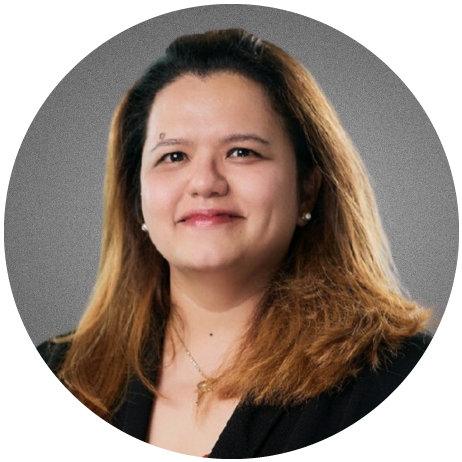
Raquel Magalhães is a PhD scientist with over 22 years of experience in life sciences and biotech across APAC. She began her research career as a bench trainee at the University of Würzburg, completed her PhD at NUS, held research and commercial roles at A*STAR, Affymetrix, and Thermo Fisher, and now leads Business Development at DKSH Scientific Solutions in Singapore. Connect with her on LinkedIn. *Views expressed are her own.
[← Back to Part 2] | Series: AI & the Future of Protein Drug Discovery in APAC
Sources:
About the Author
Raquel Magalhaes joined DKSH in 2023 as a Group Business Development Manager based at the Singapore office. She brings a wealth of experience in Biotechnology sales, cultivated through her impactful role at Thermo Fisher Scientific, and her research background with prestigious institutions. In her current role, she is responsible for driving sustainable growth in the Life Sciences sector.
Raquel Magalhaes
Life Science


Recent Posts


Subscribe now
Stay updated with the latest news and offers
